

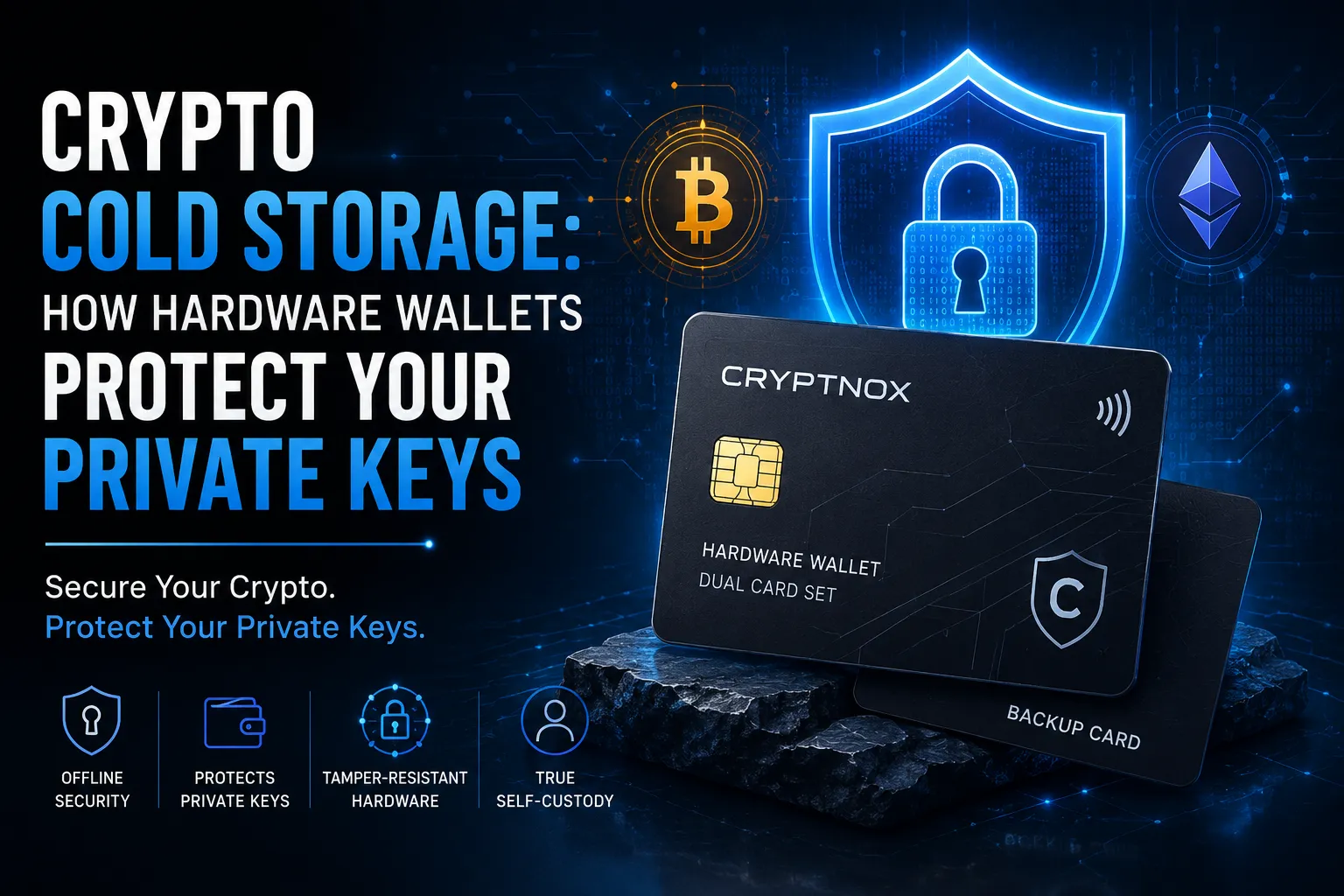
As cryptocurrency ownership grows, protecting private keys has become just as important as choosing the right digital asset. Crypto cold storage is one of the most effective approaches for reducing exposure to online threats because it keeps sensitive cryptocurrency keys away from internet-connected environments.
Unlike hot wallets, which remain connected to the internet and can be exposed to phishing, malware, malicious websites, and compromised devices, crypto cold storage is designed around offline key protection. Hardware wallets are a practical way to implement this approach while still allowing users to manage digital assets when needed.
For Bitcoin, Ethereum, and other cryptocurrencies, understanding crypto cold storage can help investors make better decisions about long-term asset security, private-key management, and self-custody.
What Is Crypto Cold Storage?
Crypto cold storage refers to keeping cryptocurrency private keys offline or isolated from routine internet-connected environments. The core idea is simple: if a private key is not exposed to an online device, many remote attack methods become significantly more difficult.
A cold storage wallet typically stores or protects the private keys without continuously exposing them to the internet. The cryptocurrency itself does not physically sit inside the wallet. Instead, the wallet protects the cryptographic credentials needed to authorize transactions recorded on a blockchain.
This distinction is important. Your Bitcoin or Ethereum remains on its respective blockchain, while the wallet protects the keys that control access to those assets.
How Does Crypto Cold Storage Work?
The security model behind crypto cold storage separates key protection from everyday internet activity.
With a conventional online wallet, private keys may be handled by software running on a smartphone or computer. If that device becomes compromised, attackers may attempt to steal credentials or manipulate transactions.
A hardware-based cold storage approach instead uses dedicated hardware to protect sensitive key material.
A typical process works like this:
-
Private keys are generated or stored within a protected hardware environment.
-
The keys remain isolated from ordinary internet-connected applications.
-
When a transaction is required, the hardware wallet uses the private key to authorize it.
-
The user verifies and approves the transaction.
-
The transaction is then transmitted to the blockchain network.
This architecture reduces the need to expose private keys to the host computer or smartphone.
Why Hardware Wallets Are Important for Cold Storage
A hardware wallet provides a dedicated environment for protecting cryptocurrency keys. This can be particularly useful for users holding assets for extended periods or managing meaningful amounts of cryptocurrency.
Modern hardware wallets can incorporate security features such as secure elements, protected key storage, transaction verification, and physical controls. These mechanisms are designed to reduce the risk of private-key extraction.
A crypto cold storage solution can also use a card-based architecture, providing an alternative to traditional USB-style hardware wallets.
The advantage of dedicated hardware is that private keys can remain separated from potentially vulnerable operating systems. Even when a computer is infected with malware, properly designed hardware wallets can prevent the private key itself from being exposed.
Bitcoin Cold Storage: Why It Matters
Bitcoin cold storage is particularly relevant to long-term Bitcoin holders who prioritize self-custody.
Bitcoin transactions require cryptographic authorization from the holder of the relevant private key. If that key is compromised, an attacker may be able to move the associated funds.
Using crypto cold storage reduces the amount of time sensitive keys need to interact with online environments.
For example, an investor who purchases Bitcoin for long-term holding may keep the signing keys in dedicated hardware rather than leaving them in an exchange account or continuously connected software wallet. The Bitcoin remains on the blockchain, while the hardware provides controlled access to the credentials required for transactions.
Ethereum Cold Storage and Smart-Contract Assets
The same security principles apply to Ethereum cold storage.
Ethereum users may hold ETH as well as tokens and interact with decentralized applications. These activities can increase exposure to malicious contracts, phishing websites, fake applications, and other threats.
A hardware wallet can provide an additional security boundary by keeping private keys within dedicated hardware while allowing users to approve transactions when necessary.
For users seeking offline crypto key storage, the important principle is not simply keeping a device disconnected. It is maintaining control over private keys and carefully managing when and how those keys are used.
Cold Storage vs Hot Wallets
The primary difference between cold and hot storage is connectivity.
Hot wallets are designed for frequent transactions and remain connected to online environments. This makes them convenient for everyday use but potentially increases exposure to online threats.
Cold storage prioritizes isolation and long-term security.
A practical strategy may therefore involve using a hot wallet for smaller amounts intended for regular transactions while keeping larger or long-term holdings in crypto cold storage.
This approach can reduce the amount of cryptocurrency exposed to everyday online activity.
How to Choose a Cold Storage Wallet
When evaluating a cold storage wallet, consider more than simply whether it is offline.
Important factors include:
-
Private-key protection: Understand how keys are generated, stored, and protected.
-
Secure hardware: Look for hardware designed specifically to protect sensitive cryptographic material.
-
Transaction verification: The device should provide a reliable way to verify transaction details before approval.
-
Backup architecture: Consider how access can be recovered if the primary device is lost or damaged.
-
Asset compatibility: Confirm support for the cryptocurrencies and networks you actually use.
-
Usability: Security is more effective when the wallet is straightforward to operate correctly.
A cryptocurrency cold storage device should ultimately balance strong security with practical usability.
Best Practices for Crypto Cold Storage
Hardware alone does not guarantee complete security. Users should also follow sound self-custody practices.
Never share private keys or recovery credentials with another person. Be cautious of websites, emails, applications, and messages requesting wallet credentials. Verify transaction details before approving them, particularly when interacting with unfamiliar addresses or decentralized applications.
It is also important to maintain a secure backup strategy. Losing access to a wallet without a valid recovery method can be just as serious as having credentials stolen.
For long-term holders, Bitcoin cold storage can provide a structured way to separate valuable assets from everyday online activity.
Is Crypto Cold Storage Completely Risk-Free?
No security method eliminates every possible risk.
Crypto cold storage primarily addresses threats associated with online exposure, but users still need to consider physical loss, theft, unauthorized access, compromised recovery information, fraudulent transactions, and poor operational practices.
The strongest approach combines secure hardware with disciplined self-custody procedures. Users should understand what they are approving, protect recovery information, keep software and firmware appropriately maintained, and avoid trusting unsolicited instructions.
For investors managing significant digital assets, offline crypto key storage can be an important part of a broader cryptocurrency security strategy.
Conclusion
Crypto cold storage provides a security-focused approach to cryptocurrency self-custody by keeping private keys isolated from routine online environments. Hardware wallets make this approach practical by providing dedicated infrastructure for protecting and using cryptographic keys.
Whether you are considering Bitcoin cold storage, Ethereum cold storage, or long-term digital-asset protection, the fundamental principle remains the same: protect the private keys that control your assets.
A well-designed hardware wallet, combined with secure backups and careful transaction practices, can significantly strengthen a self-custody strategy. For cryptocurrency holders who prioritize control and security, crypto cold storage remains an important method for reducing unnecessary exposure to online threats.