

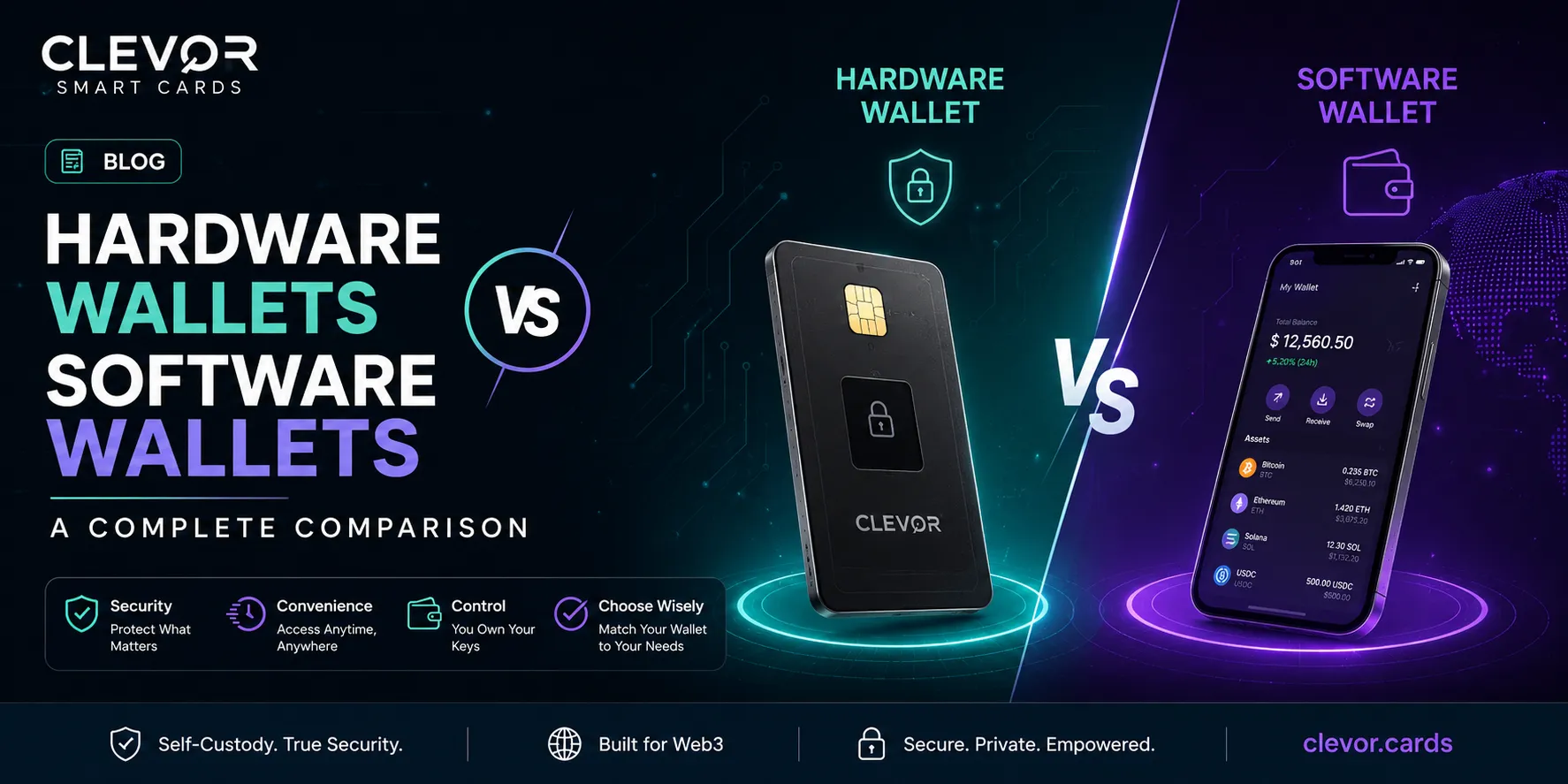
Cryptocurrency ownership comes with one important responsibility: protecting your private keys. Whether you’re a first-time investor or an experienced Web3 user, choosing the right wallet directly impacts the security and accessibility of your digital assets. The debate around hardware wallet vs software wallet continues because each solution serves different needs, risk profiles, and usage patterns. Understanding how these wallets work can help you make informed decisions while reducing the chances of theft, phishing attacks, or accidental loss. In this guide, we’ll compare their features, security, convenience, costs, and ideal use cases so you can confidently choose the wallet that best fits your crypto journey.
Understanding Crypto Wallets
A crypto wallet does not actually store cryptocurrency. Instead, it securely manages the private keys that provide access to your blockchain assets. There are two primary categories:
-
Hardware wallets
-
Software wallets
Both allow you to send, receive, and manage cryptocurrencies, but they differ significantly in how they store and protect your private keys.
What Is a Hardware Wallet?
A hardware crypto wallet is a physical device specifically designed to keep private keys offline. Since the keys never remain exposed to internet-connected devices, hardware wallets offer one of the highest levels of protection against online attacks.
Most modern hardware wallets include secure elements, PIN protection, encrypted storage, and recovery seed functionality. Transactions are signed within the device itself, ensuring sensitive information never leaves the secure environment.
Key Advantages of Hardware Wallets
-
Offline storage significantly reduces hacking risks.
-
Strong protection against malware and phishing attacks.
-
Suitable for storing large cryptocurrency holdings.
-
Supports long-term investment strategies.
-
Many models include advanced security chips and secure firmware.
Potential Limitations
-
Higher upfront purchase cost.
-
Requires carrying a physical device.
-
Slightly slower transaction process than software wallets.
What Is a Software Wallet?
A software crypto wallet is a digital application installed on smartphones, desktops, or accessed through a web browser. It stores encrypted private keys on the connected device, making it convenient for frequent cryptocurrency transactions.
Software wallets are widely used because they provide fast access to digital assets while supporting decentralized applications, NFT platforms, and DeFi protocols.
Benefits of Software Wallets
-
Free or inexpensive to use.
-
Quick setup and easy access.
-
Convenient for everyday crypto transactions.
-
Compatible with numerous blockchain ecosystems.
-
Excellent for active traders and Web3 users.
Possible Risks
-
Internet connectivity increases exposure to cyber threats.
-
Vulnerable to malware, spyware, or compromised devices.
-
Phishing attacks may target wallet credentials.
-
Device theft can create additional security concerns if proper protection is not enabled.
Hardware Wallet vs Software Wallet: Security Comparison
Security is the biggest differentiator in the hardware wallet vs software wallet discussion.
Hardware wallets isolate private keys from internet-connected environments. Even if a computer becomes infected with malware, attackers generally cannot extract private keys stored within the secure hardware.
Software wallets, on the other hand, rely heavily on the security of the device they operate on. Strong passwords, biometric authentication, multi-factor authentication, and regular software updates improve protection, but internet exposure always introduces additional risks.
If maximum security is your priority, hardware wallets remain the preferred solution for safeguarding valuable crypto assets.
Convenience and Accessibility
While hardware wallets excel in security, software wallets deliver greater convenience.
Software wallets enable users to:
-
Access assets instantly.
-
Connect quickly to decentralized applications.
-
Trade frequently.
-
Manage multiple blockchain networks from a single interface.
Hardware wallets require connecting the physical device whenever transactions are approved. Although this extra step enhances security, it may not be ideal for users making multiple daily transactions.
Your choice depends on whether convenience or protection matters more for your specific crypto activities.
Cost Considerations
Software wallets are typically free to download, making them attractive for beginners.
Hardware wallets involve an initial purchase, but many investors consider the expense worthwhile when protecting significant cryptocurrency holdings. The cost of a quality hardware wallet is often far lower than the financial impact of losing digital assets to a cyberattack.
For long-term investors, the additional investment can provide valuable peace of mind.
Which Wallet Is Best for Different Users?
Choosing between hardware and software wallets depends on your goals.
A hardware wallet is ideal if you:
-
Hold large cryptocurrency portfolios.
-
Prefer long-term investing.
-
Prioritize maximum security.
-
Rarely move funds.
A software wallet may be better if you:
-
Trade regularly.
-
Use decentralized finance platforms.
-
Interact with NFTs.
-
Need fast daily access to digital assets.
Many experienced crypto users combine both approaches. They keep most of their holdings in a hardware wallet while maintaining a smaller balance in a software wallet for everyday transactions. This hybrid strategy balances security with convenience.
Best Practices for Protecting Any Crypto Wallet
Regardless of your wallet choice, following security best practices is essential.
-
Never share your recovery phrase.
-
Store backup phrases securely offline.
-
Enable PINs, passwords, or biometric authentication.
-
Verify transaction details before signing.
-
Keep wallet software and firmware updated.
-
Avoid downloading unofficial wallet applications.
-
Be cautious of phishing websites and fake customer support requests.
Strong personal security habits remain one of the most effective defenses against cryptocurrency theft.
Final Thoughts
The choice between hardware wallet vs software wallet ultimately depends on how you use cryptocurrency. Hardware wallets provide unmatched protection by keeping private keys offline, making them an excellent choice for long-term investors and anyone securing substantial digital assets. Software wallets offer speed, flexibility, and seamless access to Web3 services, making them ideal for active users who prioritize convenience. For many crypto holders, combining both solutions delivers the best balance of security and usability. As digital assets continue to gain mainstream adoption, selecting the right wallet is one of the most important decisions you can make to protect your investments and confidently participate in the evolving blockchain ecosystem.