





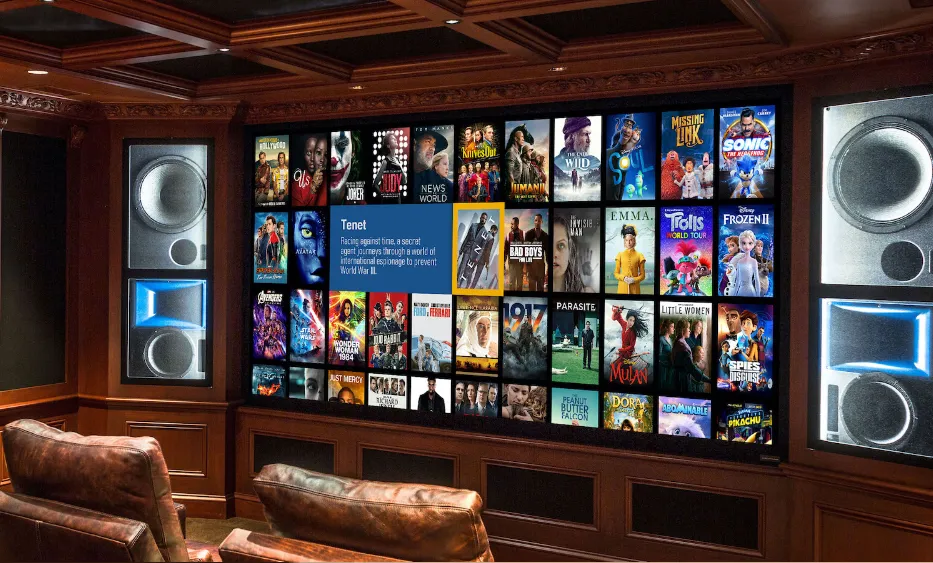
Few things interrupt a movie more than constantly adjusting the volume to understand conversations. Explosions may sound overwhelming, while quieter dialogue becomes difficult to follow. This problem does not always mean the speakers are inadequate. Room acoustics, playback settings, seating positions, and speaker placement can influence speech clarity. During home entertainment system installation, addressing these factors early can prevent frustrating listening experiences. Understanding the causes helps homeowners make meaningful improvements without automatically replacing expensive equipment.
Understand Why Dialogue Gets Lost
Movie soundtracks contain several elements, including speech, music, environmental effects, and low-frequency sounds. These elements are mixed to create a particular listening experience, but their presentation depends on the playback system. In a surround sound arrangement, much of the dialogue usually comes from the center channel. If that speaker is poorly positioned or incorrectly configured, voices may seem distant or muffled.
Room reflections can also interfere with intelligibility. Sound bouncing from hard surfaces may reduce the distinction between spoken words, particularly when dialogue overlaps with background effects.
Examine the Position of the Center Speaker
A center speaker should direct sound toward the primary listening area rather than toward furniture or an enclosed cabinet. Placing it deep inside a shelf can introduce unwanted reflections and obstruct sound dispersion. Positioning it too low or high may also affect clarity for seated viewers. Whenever practical, the speaker should sit near the screen and face the audience. The manufacturer’s placement guidance should determine appropriate clearances and orientation.
Homeowners using acoustically transparent projection screens may have additional positioning options, provided the speaker and screen are compatible with the arrangement.
Check the Quality of the Audio Source
A well-positioned speaker cannot reproduce information missing from the original soundtrack. Audio format, compression, and the capabilities of the playback chain can influence the listening experience. The Kaleidescape Strato E supports lossless multichannel audio, including compatible Dolby Atmos and DTS soundtracks. However, accessing these formats requires suitable movie content and compatible downstream equipment.
Lossless audio preserves the encoded soundtrack without additional lossy compression, but it does not automatically guarantee understandable dialogue. Speaker placement, receiver settings, and the room’s acoustic characteristics remain important.
Review Receiver Settings Before Buying Equipment
Incorrect configuration can make an otherwise capable audio system sound unbalanced. Homeowners should check whether the receiver recognizes the correct speaker arrangement and whether individual channel levels are appropriately calibrated. Speaker distance settings, crossover frequencies, and supported room correction features can also influence playback.
Some systems provide dialogue enhancement or dynamic range controls. These features may be useful for quieter listening, although their operation varies between manufacturers. Instead of changing multiple settings simultaneously, make controlled adjustments and evaluate familiar scenes. This approach makes it easier to identify which changes genuinely improve speech clarity.
Reduce Reflections Around the Listening Area
Hard flooring, exposed windows, and large bare walls can create reflections that interfere with dialogue.
The goal is not to eliminate every reflection. Rather, homeowners should achieve a comfortable balance between direct sound and unwanted reverberation.
Several practical improvements may help:
-
Position speakers away from obstructive furniture.
-
Introduce suitable rugs or upholstered furnishings.
-
Consider acoustic treatments at problematic reflection points.
-
Avoid placing reflective objects directly beside speakers.
-
Evaluate dialogue clarity from the main seating positions.
Professional acoustic measurements may be beneficial when simpler adjustments do not resolve persistent problems.
Consider Background Noise and Listening Levels
Dialogue clarity depends partly on the difference between speech and surrounding noise. Air conditioning systems, ventilation fans, traffic, and household appliances can mask quieter conversations, especially during dramatic scenes. Reducing background noise may improve intelligibility without increasing playback volume.
Listening habits also matter. Movie soundtracks can contain substantial differences between quiet and loud passages. At lower volumes, compatible dynamic range controls may help reduce these differences. However, excessive processing can change the intended soundtrack balance. Homeowners should experiment carefully and prioritize comfortable listening rather than maximum loudness.
Test Dialogue With Different Types of Movies
A single demonstration scene cannot reveal how a home theater performs across different soundtracks. Choose movies featuring quiet conversations, busy environments, and scenes that transition between dialogue and action. Listen from the seats normally used by household members. Voices should remain understandable without requiring frequent volume adjustments.
If some seats consistently produce weaker clarity, speaker direction or room acoustics may need further attention. Testing should also include ordinary listening volumes rather than unusually loud demonstration settings. A consistent evaluation process helps identify practical improvements before additional equipment purchases become necessary.
Conclusion
Clear movie dialogue results from cooperation between the soundtrack, speakers, room, and playback equipment. Expensive hardware alone cannot resolve obstructed speakers, inappropriate settings, or excessive background noise. Homeowners can often make meaningful progress by examining these conditions systematically. Epic Systems offers audio and home theater integration services for customers exploring more refined entertainment installations. The most satisfying result is not necessarily a louder system, but one that allows viewers to follow conversations comfortably while preserving the emotional impact of music and sound effects.